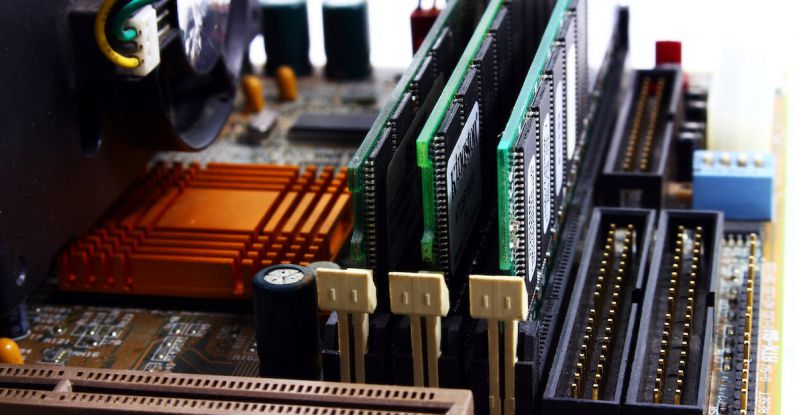
When it comes to gaming, one of the most important components to consider is the RAM (Random Access Memory) of your system. RAM plays a crucial role in determining the overall performance and smoothness of your gaming experience. In this article, we will explore the significance of RAM in gaming and how it can impact your gameplay.
What is RAM?
RAM is a type of computer memory that is used to store data that is currently being used by the operating system and applications. Unlike permanent storage such as hard drives or solid-state drives, RAM is volatile, meaning it does not retain data once the system is powered off. RAM acts as a temporary workspace for the CPU (Central Processing Unit) to access and store data quickly, allowing for faster processing speeds.
How Does RAM Affect Gaming?
RAM has a direct impact on gaming performance as it affects both the loading times and the overall smoothness of gameplay. When you launch a game, the system loads the necessary data from the storage device into RAM. The more RAM your system has, the more data it can store, resulting in faster loading times.
Furthermore, RAM also affects the performance during gameplay. As you play a game, the system continuously accesses and stores data in RAM. This includes textures, models, audio files, and other game assets. Insufficient RAM can lead to frequent stutters, frame rate drops, and overall lag in gameplay. On the other hand, having an adequate amount of RAM allows the system to handle these assets efficiently, resulting in a smoother gaming experience.
How Much RAM Do You Need?
The amount of RAM you need for gaming depends on several factors, such as the requirements of the games you play and the overall performance of your system. In general, most modern games recommend a minimum of 8GB of RAM. However, for optimal gaming performance, it is advisable to have at least 16GB of RAM.
Having more RAM than the minimum requirements can also be beneficial, especially if you tend to multitask while gaming. Running other applications in the background, such as web browsers or streaming software, can consume additional RAM. Having extra RAM ensures that your system has enough resources to handle both the game and these background processes without any performance issues.
Considerations for RAM Speed
Apart from the amount of RAM, the speed of the RAM modules also plays a role in gaming performance. RAM speed is measured in megahertz (MHz) and determines how fast the data can be accessed and transferred. Higher RAM speeds result in faster data transfer rates, which can lead to improved performance in games.
However, it is important to note that the impact of RAM speed on gaming performance is not as significant as the amount of RAM. While faster RAM can provide a slight boost in performance, the difference is often negligible compared to having more RAM. Therefore, it is generally recommended to prioritize the amount of RAM over the speed when considering upgrades for gaming purposes.
In conclusion, RAM is a crucial component for optimal gaming performance. It directly affects loading times, smoothness of gameplay, and the overall responsiveness of your system. Having an adequate amount of RAM, preferably 16GB or more, ensures that your system can handle the demands of modern games without any performance issues. While RAM speed can provide a slight improvement, it is not as crucial as the amount of RAM itself. By considering these factors, you can enhance your gaming experience and enjoy a seamless gameplay session.